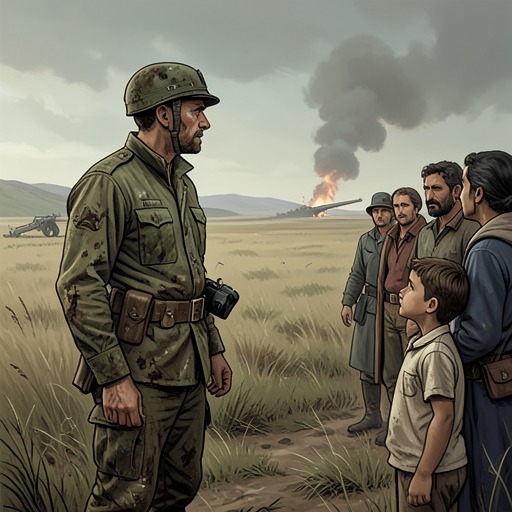
“’Tis one thing for a soldier to gather laurels—and ’tis another to scatter cypress”
The Life and Opinions of Tristram Shandy, Gentleman“’Tis one thing for a soldier to gather laurels—and ’tis another to scatter cypress” is Toby’s distinction between winning military honor and bringing grief through war. Its decisive point is that a soldier can be eager to fight and still feel deeply for those who suffer from conflict.
Meaning and Contrast
The saying sets laurels, a sign of military achievement, against cypress, which Toby identifies as a marker of mourning among the ancients. The contrast does not condemn courage or deny the honor a soldier may win; it separates that honor from the sorrow war leaves behind. The two images give different moral weights to the same experience: victory may bring laurels, while loss calls for cypress.
Context in Toby’s Argument
Toby uses the distinction while answering his brother’s suggestion that his martial ardor might mean he is cruel. He recalls how, as a schoolboy, he felt for the suffering of the Greeks and Trojans, and explains that his heart could respond both to war’s excitement and to its distress. The maxim condenses this defense: a soldier’s readiness to hazard his life does not prevent him from grieving for the human cost of battle.
Narrative and Ethical Significance
The expression makes compassion part of Toby’s account of soldierly character, rather than its opposite. Its balanced construction turns on the difference between gathering honor and causing mourning, allowing martial bravery and tenderness toward suffering to coexist. When Toby pauses to ask who told him that the ancients used cypress on mournful occasions, the elevated image is briefly interrupted by the conversational digression characteristic of his exchange with his brother.